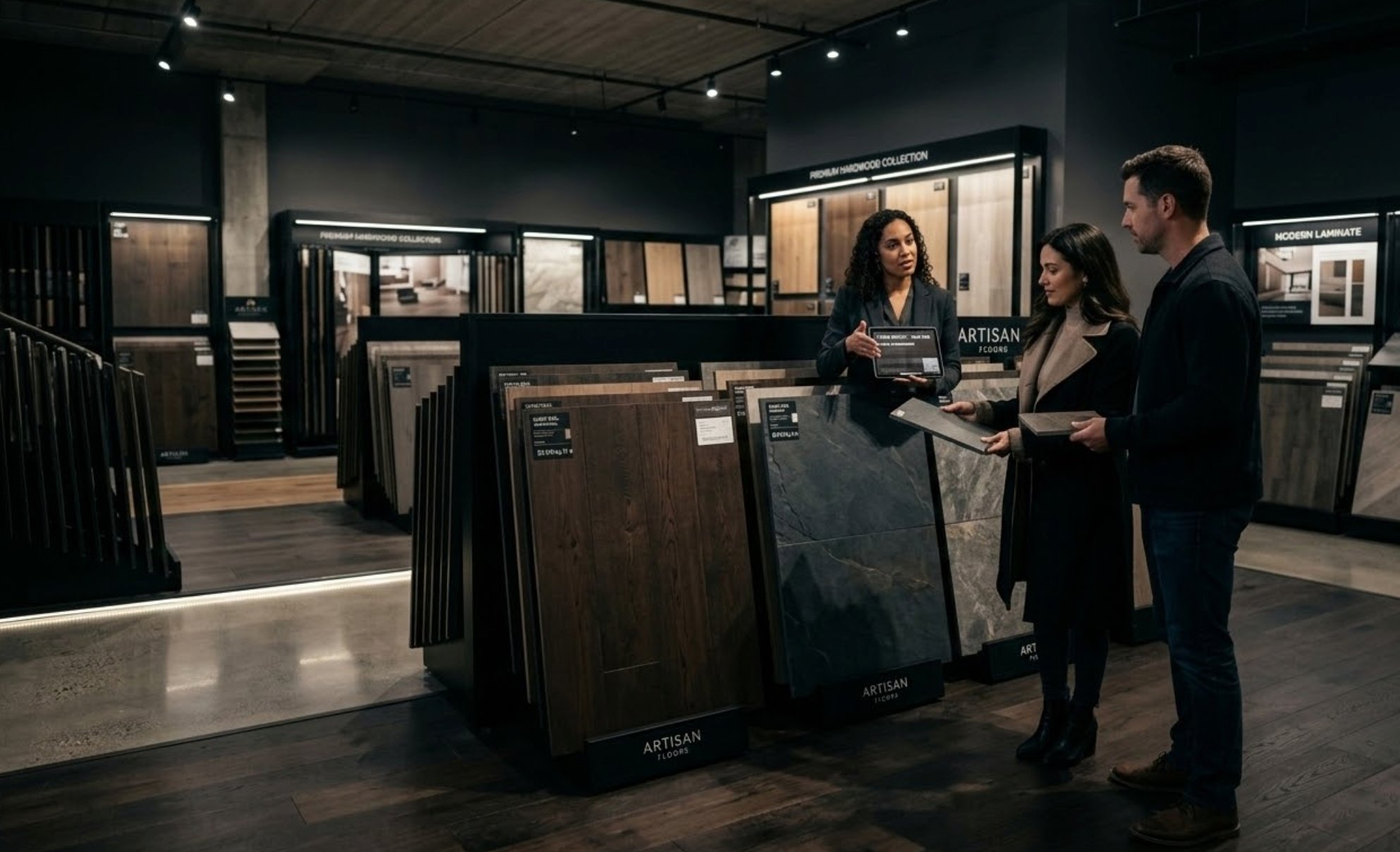
Flooring sales has a specific challenge that most other home services don't: the customer is almost never in an emergency. They're planning. That means they're calling multiple companies, getting multiple estimates, and - critically - they're forming impressions based on how each company handles the initial call.
The first call isn't just logistics. It's your first sales presentation. And most flooring companies are bombing it.
More likely to win the job when you book the estimate on the first call
Flooring customers who agree to an in-home estimate on the first contact convert at more than three times the rate of those who say "I'll call back to schedule." Getting the appointment locked in before the call ends is the single most important metric.
The flooring call problem: too much information, too little commitment
Here's the most common flooring call pattern: the customer asks about pricing for hardwood in their living room (say, 400 square feet). The salesperson gives a price-per-square-foot range, explains material grades, maybe mentions installation cost separately. The customer says "okay great, I'll get back to you." And then they hang up to call someone else.
The rep was helpful. They answered the question. They did not, however, do anything to earn a next step. No estimate scheduled. No timeline established. No reason given for why this company is different from the next one on the list.
"Yeah, I think so. I'll do some research and get back to you."
"Sounds good! Let us know if you have any questions."
The four calls that decide whether you win the job
1. The "just getting prices" call
This is the most common call type. The customer says they're "just looking" or "getting a few prices." This isn't disqualifying - it's actually your best opportunity to get ahead of everyone else they'll call.
Get curious before you get competitive: "What's the project you're working on?" Get them talking about their timeline, their vision, the room. Then position the free estimate as the logical next step - not a sales visit, but a professional measurement that gives them an accurate number to compare with whoever else they call.
2. The "it's for a renovation project" call
This caller has a general contractor, a timeline, and a budget. Flooring is one piece of a larger project. They need someone reliable who can hit a deadline - not just the cheapest price.
Lead with your installation speed and reliability record, not your pricing. Ask when the floors need to be done and work backwards. Callers on renovation timelines are willing to pay a premium for certainty. Give them certainty.
3. The "how long does installation take" call
This is a disguised urgency call. The customer has a deadline - guests coming, a move-in date, a rental turnover. They're not actually asking about duration; they're asking if you can meet their timeline.
Confirm the deadline first: "When do you need it done by?" Then work backwards. If you can hit it, say so directly: "We can absolutely have that done by [date] - let me get you on the schedule for a measurement this week." If it's tight, address it head-on rather than hedging.
4. The "I want the cheapest option" call
Price-first callers seem like the least promising leads. But our data shows that flooring customers who call leading with price convert at nearly the same rate as others - when the call is handled well.
Don't default to your cheapest product. Ask a clarifying question: "Is budget the main priority, or are you looking for the best value at a reasonable price?" Most people answer "value" - and now you're having a different conversation. Then frame your mid-range options as exactly that: the best value.
The insight no one talks about: Flooring customers make their final decision during the in-home estimate, not on the phone. Your goal on the first call isn't to sell flooring - it's to sell the estimate appointment. Everything else follows from there.
The one question that changes flooring phone sales
After analyzing thousands of flooring calls, there's one question that separates high-converting reps from everyone else. It's not a close, it's not a price anchor - it's a discovery question that reps ask early in the call:
"What made you decide to redo the floors - is this for yourself or are you getting ready to sell?"
That single question tells you everything: budget sensitivity, timeline urgency, aesthetic priorities, and decision-making process. Sellers who ask it early in the call close at dramatically higher rates - because they stop pitching and start solving.
Find out which flooring calls you're losing and why.
CallVelocity analyzes every inbound call and shows your team exactly where estimates are slipping away.
Book a Free DemoNo credit card · No commitment · 15 minutes