A new patient call to a dental practice is one of the highest-value inbound calls in any service business. The average new patient relationship is worth $5,000 to $15,000 in lifetime revenue - and that relationship starts the moment someone dials your number.
Yet most dental practices treat that call like a scheduling transaction rather than a sales conversation. Front desk staff are trained to check the calendar and confirm insurance - not to build trust, handle anxiety, or make the patient feel like they've found the right place.
of new patient inquiry calls never result in a booked appointment
Analysis of inbound dental calls shows more than 1 in 3 prospective patients hang up without scheduling - the majority of whom were never directly asked to book.
The same patterns appear in practice after practice. They're not hard to fix - but you have to know they're happening first.
Pattern 1: Leading with insurance before building trust
The most common new patient call in dentistry looks like this: the caller says they're looking for a new dentist. The front desk immediately asks "do you have dental insurance?" The caller gives their plan. The coordinator puts them on hold, comes back, and says "yes, we take that." Brief silence. Call meanders. The caller says they'll think about it and hangs up.
Insurance verification is important - but it's not a rapport-builder. When it's the first thing a patient hears, it signals that your practice is transactional. Patients choose dentists they trust. Trust requires a human moment before a logistics moment.
Pattern 2: Not addressing dental anxiety
Dental anxiety affects roughly 1 in 4 adults. For many of them, the phone call is actually harder than the appointment - it's the moment they're finally admitting they've been avoiding the dentist and asking for help. When that vulnerability is met with clipboard-style intake questions, they hang up and go back to avoiding.
Your front desk team doesn't need to be therapists. They just need to normalize the anxiety and make the patient feel like your practice is different.
Train your team to name the anxiety before the patient has to
When a caller sounds hesitant or mentions it's been a while since their last visit, meet them there:
"It sounds like it's been a little while - that's actually really common, and I want you to know we see patients in exactly that situation all the time. Dr. Morrison is really great with patients who are nervous or haven't been in a while. A lot of our patients tell us it was way easier than they expected. Want me to get you scheduled for just a basic checkup so you can get a feel for us first?"
Pattern 3: The insurance dead-end
When a patient's insurance isn't accepted, most front desk staff say "I'm sorry, we're not in-network with that plan" and the call ends there. This is a massive missed opportunity. Out-of-network doesn't mean unaffordable - and many patients don't know the difference between in-network benefits and out-of-pocket cost with a practice that offers a payment plan.
Common mistake: Treating an out-of-network answer as a rejection rather than an objection. Patients who call your practice specifically chose you - because of a referral, your reviews, or your location. That intent has value. Don't let a plan name end a conversation that started with genuine interest.
Reframe out-of-network as a financial conversation, not a dead end
"We're actually out-of-network with that plan, but I don't want that to stop us from being able to help you. A lot of our patients with that plan still come to us - here's why: you can still submit your claims and get reimbursed directly, and for anything beyond your coverage we offer 0% financing through CareCredit. A lot of patients find it works out to be really affordable. Would it help if I broke down what a new patient visit would typically run so you can compare?"
Pattern 4: No urgency, no close
Even when a new patient call goes well, many front desk coordinators end it passively - "just go to our website to book" or "you can call back when you're ready." This is the single most fixable problem in dental phone conversion. The patient is on the phone right now. The calendar is right there. There is no reason not to book the appointment in that moment.
Patients who leave a dental call without an appointment time in hand have a dramatically lower chance of ever scheduling. Life gets in the way. The urgency fades. They forget. The practice that booked them on the call wins.
Always close with two specific options, not an open-ended invitation
"I'd love to get you locked in while we're talking - it only takes a second. I have availability this Wednesday at 2pm or Friday morning at 9:30. Which of those works better for you?"
The bigger picture
Most dental practices have no idea how their front desk team actually sounds on the phone. They hire based on personality, do a brief training, and assume calls are handled well. The result is years of new patient calls quietly leaking out - callers who were interested but didn't book, didn't feel a connection, or hit an insurance objection that nobody knew how to handle.
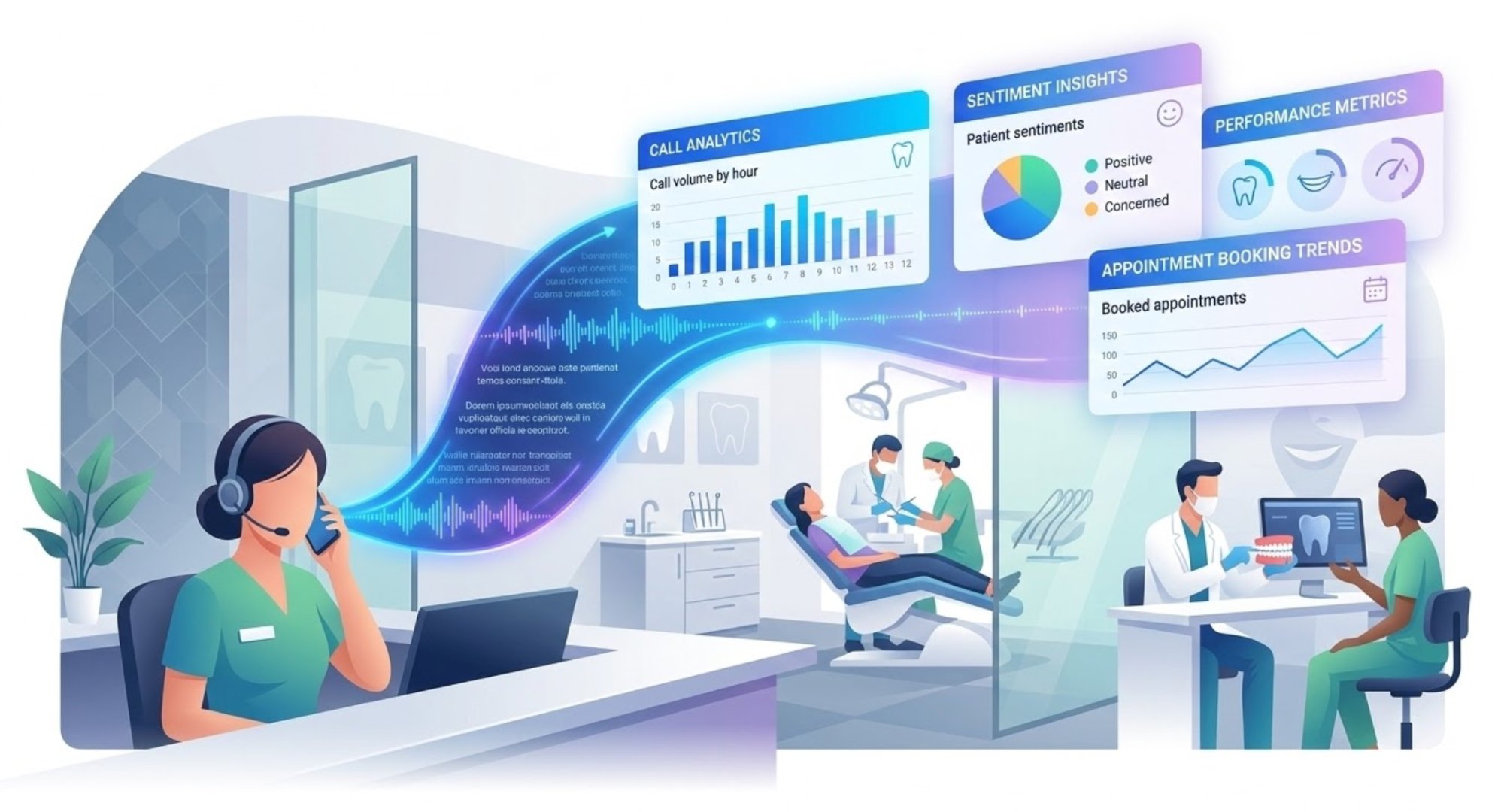
CallVelocity analyzes every inbound call, breaks it down across the dimensions that matter for new patient conversion, and surfaces specific coaching prompts for your front desk team. The practices that use it typically find that 30% to 40% of their new patient calls had at least one fixable breakdown that went completely unnoticed.
Find out what your front desk calls are really costing you.
CallVelocity analyzes 100% of your inbound calls and shows you exactly where new patients are slipping through. Book a demo - we'll analyze a real call live.
Book a Free DemoNo credit card · No commitment · 15 minutes